
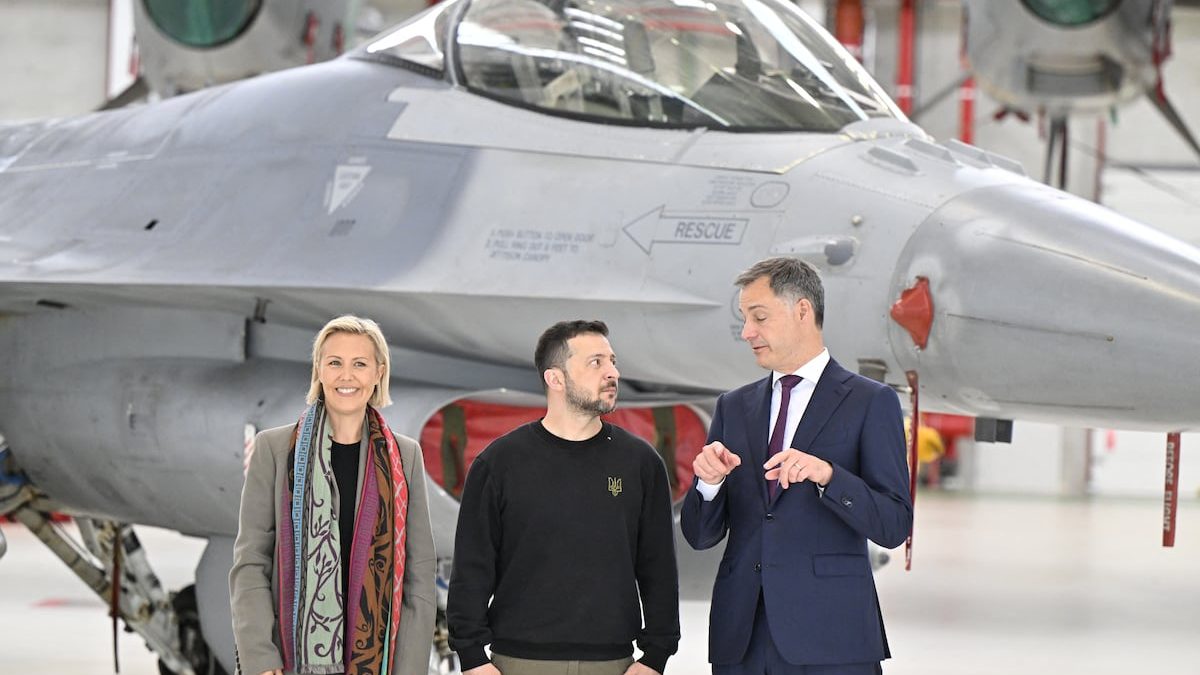

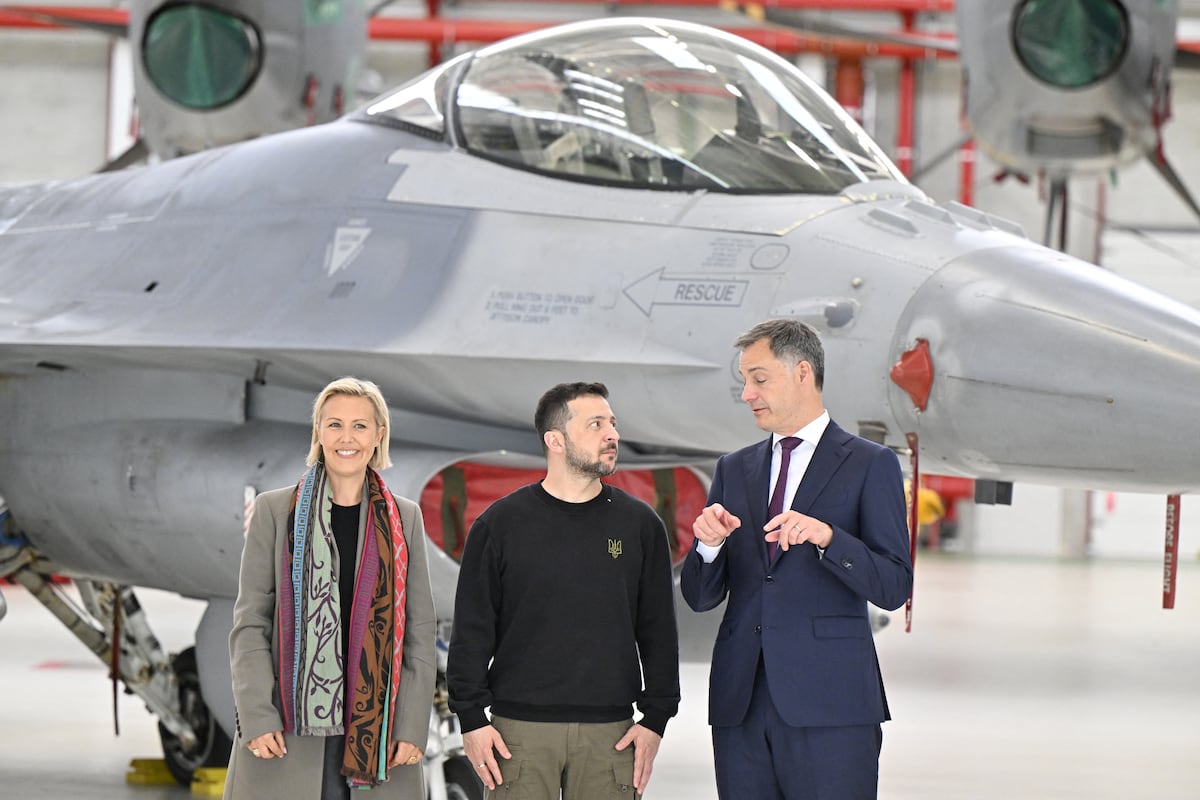
KYIV, Ukraine — A Ukrainian F-16 shot down a Russian fighter jet for the first time since the American-designed planes arrived on the battlefield in 2024, the top-ranking U.S. general told Congress on Tuesday, emphasizing the impressive progress of Kyiv’s air defense forces in shielding the country’s skies.
Gen. Dan Caine, chairman of the Joint Chiefs of Staff, pointed to the kill at a Senate Appropriations Committee hearing while being asked about a three-year halt in U.S. air-defense funding.
“I want to highlight the incredible work the Ukraine industrial base is doing as they scale their own capabilities,” Caine said.
“Recently we had the first air-to-air kill where a Ukrainian F-16 shot down a Russian fighter, so I think their ability to scale their layered defense has come a long way over the last couple of years.”
Although Caine did not specify which type of Russian aircraft was taken out, Ukraine’s Air Force announced earlier this month that it had shot down a Russian Su-35 on the eastern front.
Until now, Ukraine has primarily used its F‑16s to defensively knock down incoming drones and cruise missiles — not offensively hunting enemy aircraft. The air-to-air kill is the latest example of Kyiv’s rapidly expanded air defense network forged after persevering through years of full-scale war, Caine said.
Russia’s defense ministry has not acknowledged the loss. Pro-Russian military bloggers on Telegram confirmed a Su-35 went down and said the pilot survived and ejected safely, while other Russian channels claimed a Patriot battery delivered the fatal shot.
Ukraine’s F-16s have shot down 2,200 of roughly 3,000 Russian drones and missiles it has intercepted, air force spokesman Yuriy Ihnat told Dutch broadcaster NOS earlier this month.
The kills are in spite of the technical advantages favoring Russia’s Su-35 over Ukraine’s F-16s.
Most of it’s F‑16s were given to Kyiv by the Netherlands and Denmark, who sent rebuilt 1970s‑ and 1980s‑era F‑16A and B airframes — closer to the F‑16s that the U.S. Air Force flew in the early 2000s than to today’s newer models, according to a Sandboxx analysis.
The Su‑35S is one of the most modern fighters Moscow flies and usually comes out as the winner in a long‑range fight, experts say.
Its Irbis‑E radar can detect a fighter‑sized target at up to 250 miles (400 km) in a narrow search mode, according to its Russian manufacturer, far beyond the range of the 1990s‑era AN/APG‑66(V)2 radar on Ukraine’s F‑16s.
The Su‑35 also has the advantage of carrying the longer‑reaching R‑77M missile, which Moscow credits with a range of roughly 120 miles (190 km), against the 75 to 100 miles of the AIM‑120C‑8 AMRAAMs Ukraine is known to field, according to The War Zone.
Allies have taken notice of Kyiv’s recent battlefield successes, signing billions in arms contracts with Kyiv since the war with Iran drove up demand for the latest defense tech from Europe and the Middle East.
Ukraine’s homegrown interceptor‑drone industry has scaled rapidly in the past year, with some producers now capable of turning out over 100,000 drones per month, officials say.
Washington is also inching toward a multibillion dollar weapons‑production deal with Kyiv.
The Ukrainian armed forces are “the strongest, most powerful armed forces in all of Europe,” Secretary of State Marco Rubio said in May, months before the CIA director confirmed last week that Russian recruits last just 20 to 30 minutes after arriving on the battlefield thanks to Ukraine’s fierce drone fighting tactics.
Read the full article here