

The U.S. Army is relocating the 116th Military Intelligence Brigade, the service’s only fixed-wing aerial intelligence brigade, to Texas as part of a modernization effort centered on the forthcoming High Accuracy Detection and Exploitation System, or HADES, the Army announced on Monday.
The restructuring will also create the Army’s first operational unmanned aircraft system, or UAS, battalion at Fort Hood, where new hangars will support the larger HADES jet aircraft.
The move will begin in Fiscal Year 2027, when the brigade headquarters and two battalions relocate to the installation, followed by the remaining battalion and companies the following fiscal year.
The Army said the relocation stems from a 2018 operational gap analysis that found its legacy aerial intelligence, surveillance and reconnaissance, or AISR, fleet lacked necessary range and sensor capabilities.
“HADES will enable the Army and Joint Force to conduct long-range sensing to enable the execution of long-range precision fires,” said Maj. Gen. Timothy Brown, the commanding general of the U.S. Army Intelligence and Security Command.
HADES is a crewed, next-generation AISR system that uses artificial intelligence and machine learning to process data, the release said. The system will be fielded aboard new jet aircraft.
The service plans to purchase up to 11 custom Bombardier Global 6500 jets for the HADES program, Military Times reported in January. According to an Army Request for Information, the new jets must be able to fly at a sustained speed of 450 knots at an altitude of 51,000 feet. They must also be able to carry a minimum payload of 14,000 pounds for at least 12 hours.
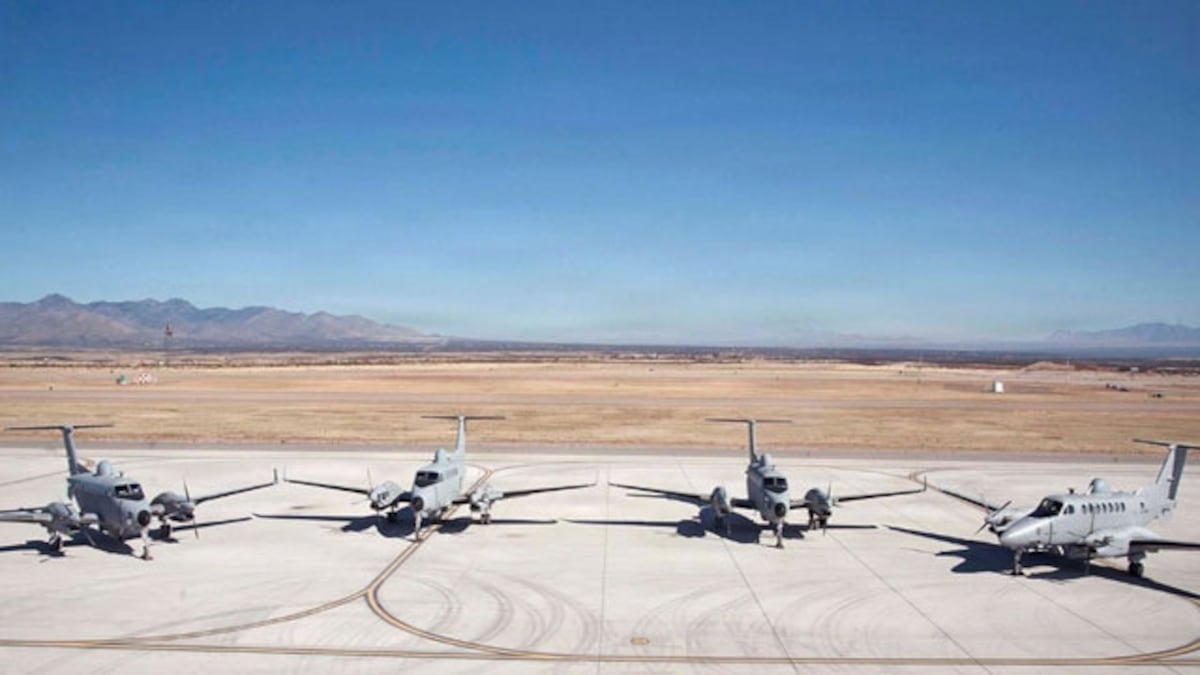
HADES’s introduction follows the Army’s retirement of approximately 60 turboprop ISR aircraft. The Army said it is “pursuing” ATHENA-R/S jet platforms in the interim until HADES is fielded.
According to the Army, the changes will increase personnel at Fort Hood by 1,228. It will also decrease personnel at Fort Bliss, Texas, by 242; Fort Gordon, Georgia, by 638; Fort Stewart, Georgia, by 186; and Hunter Army Airfield, Georgia, by 162.
Eve Sampson is a reporter and former Army officer. She has covered conflict across the world, writing for The New York Times, The Washington Post and The Associated Press.
Read the full article here