
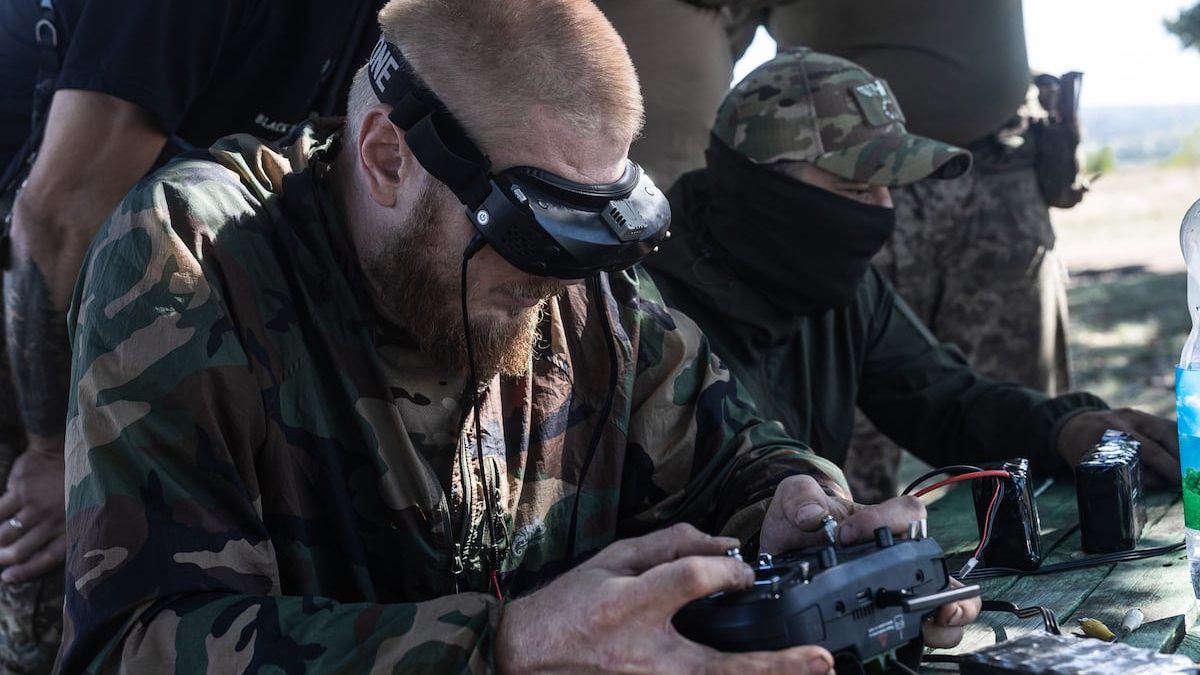

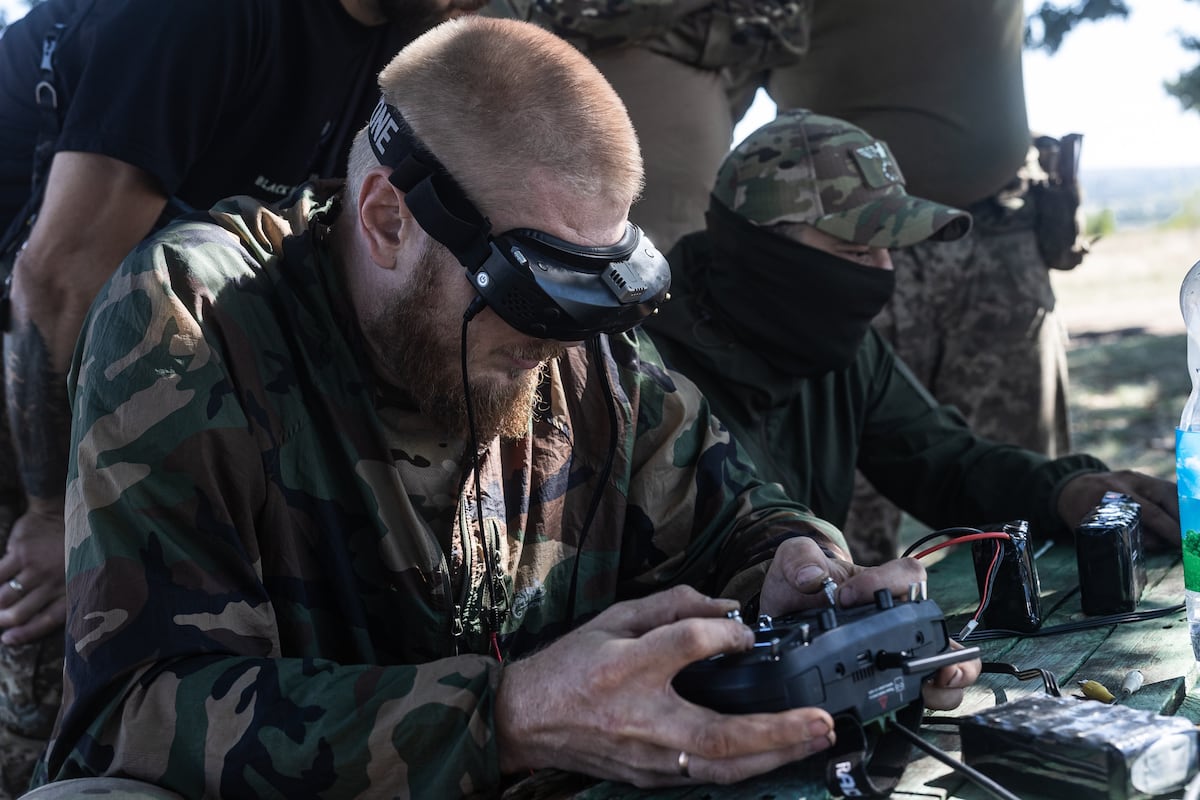
Ukraine has linked its military drones, sensors and weapons systems into a unified battlefield network, an integration Army Secretary Dan Driscoll told lawmakers Tuesday the U.S. military has yet to achieve.
During a Senate Armed Services Committee hearing, Driscoll lauded Kyiv’s “Delta” command and control system and praised its ability to “integrate every single drone, every sensor and every shooting platform into just one single network.” A stark contrast, he said, to fragmented American systems that struggle to communicate or share data.
The secretary pointed to the Army’s newly launched “Operation Jailbreak,” an effort at Fort Carson, Colorado, where Army engineers and defense contractors are working to break down software barriers that prevent systems from exchanging information.
The ability to quickly share information across systems on the battlefield allows forces to move targeting data between drones, sensors and striking systems, therefore speeding up how fast a military can identify and then attack a threat.
“For decades our budget process incentivized companies to protect their intellectual property at all costs,” a process, Driscoll said, that “created walled gardens” in the country’s command and control infrastructure.
Driscoll’s comments underscore just how heavily the American military is studying lessons from Ukraine as it adapts to a modern battlefield that is inundated with drones and electronic warfare.
Army leaders have increasingly framed battlefield networking as crucial to future wars as the volume of data inputs has grown. Officials earlier this year, informed by the Russia-Ukraine war, warned that a future large-scale conflict in Europe could involve processing around 1,500 targets per day, a pace beyond what any human could manage.
Defense companies agreed to send Army equipment, scientists and engineers to Fort Carson so the service could start integrating systems, Driscoll told the committee, saying “we will force our way through the firewalls, link every system and achieve true right to integrate.”
The secretary last week said in a social media post that the effort to “digitally connect” the Army’s systems would be the biggest hackathon in the service’s history, aimed at “breaking open these historically siloed systems to accelerate decision-making and give our soldiers the decisive edge required to win on the modern battlefield.”
Driscoll initially said in his post that some of the industry partners include Boeing, Palantir, Lockheed Martin and Anduril Industries, among others. Before the committee, he later said that by day 10 of the exercise, 30-50 companies had come on board.
Thousands of pieces of equipment would be “jailbroken,” he said, “which practically means all of them will be able to share information out of the system and receive information into the system.”
Once that could be done, Driscoll said, the Army could start using generative artificial intelligence to facilitate decision-making, a model he said the Ukrainians had been using for the entire war.
When asked why the Army had taken five years to start integrating systems, Driscoll shouldered the responsibility for not moving faster but said that American bureaucracy presents a challenge. However, Driscoll also noted that the U.S. comes with “deep infrastructure” that he said can be harnessed to move powerfully and quickly.
“We have basically the entire defense industrial base…now moving,” he said.
Sen. Jack Reed, the committee’s top Democrat, summarized the Army’s shift during the hearing.
“When I served in the military, the mantra was ‘shoot, move and communicate,’” Reed said. “Today, it’s communicate so you can shoot and move.”
Eve Sampson is a reporter and former Army officer. She has covered conflict across the world, writing for The New York Times, The Washington Post and The Associated Press.
Read the full article here