
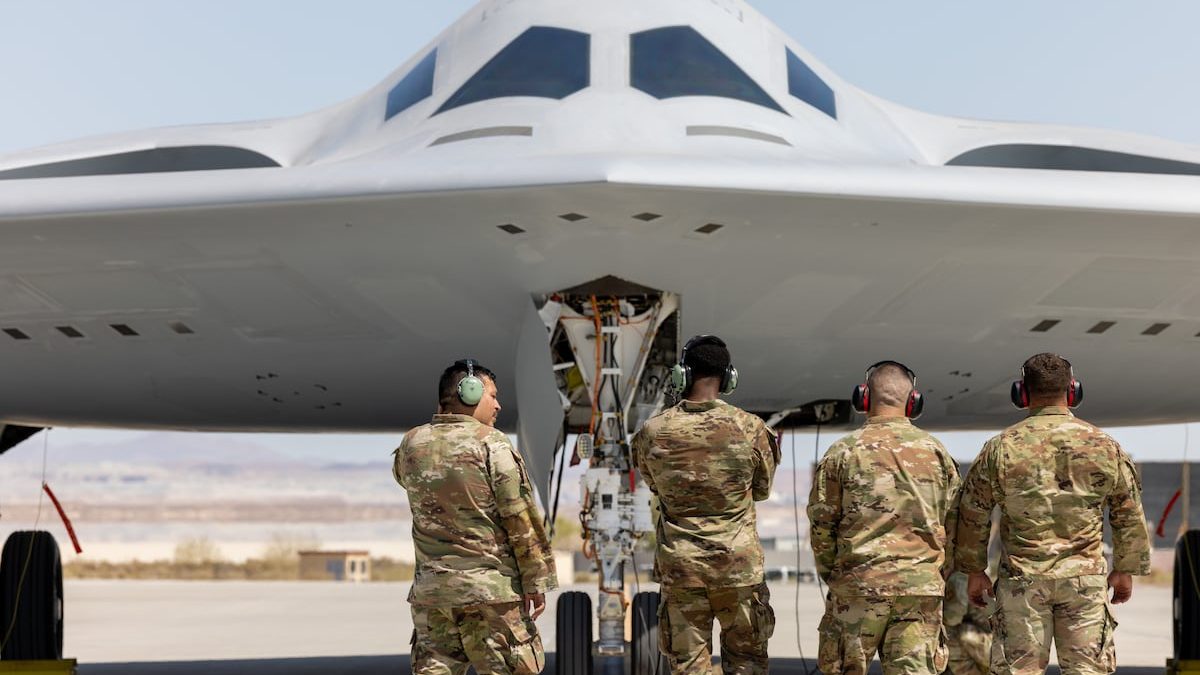

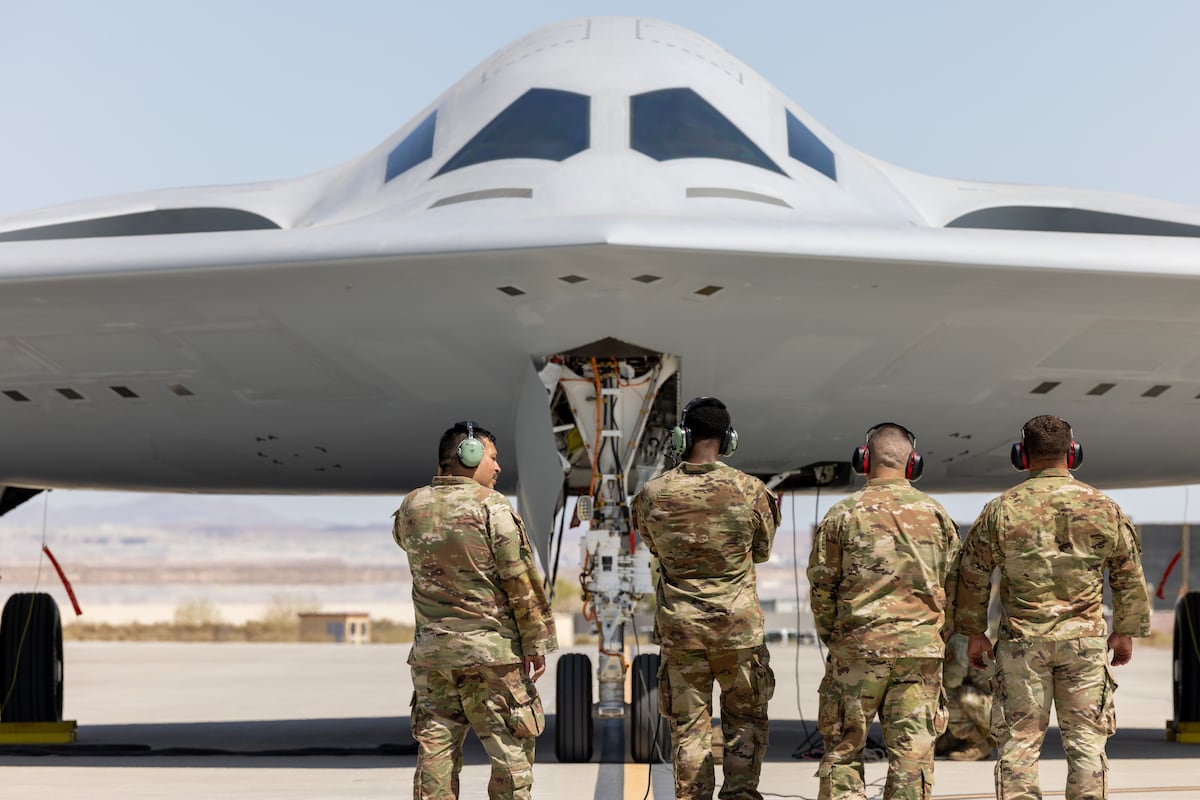
The U.S. Air Force’s B-21 Raider will operate with a two-pilot crew, the service announced Thursday.
The service determined that a two-pilot configuration would best fit the country’s newest long-range strike bomber’s “mission profile,” according to the release.
The Air Force is also creating a pilot transition program from select weapons system officers, or WSOs, and combat systems officers, or CSOs. The officers will be chosen to attend the program with a follow-on assignment to the B-21.
“To maximize the lethality and survivability of the Raider, it is imperative to retain the deep tactical and combat experience currently residing within the WSO and CSO communities,” the statement says.
When available, eligible airmen will be given the relevant information through command channels, per the release.
“This deliberate talent management strategy secures the future of global strike capabilities, ensuring the Air Force remains postured to execute extended-duration, long-range strike missions in highly contested environments,” the release reads.
The service’s first B-21 took flight in 2023 in Palmdale, California, where Northrop Grumman has been developing and testing the aircraft. The Air Force plans to build at least 100 B-21s in variants with and without pilots.
The Raider is the nation’s first new bomber aircraft in more than 30 years. It is part of the Pentagon’s effort to modernize its nuclear triad as it moves to invest in new weapons amid growing threats like China’s military modernization.
In February, Northrop Grumman and the Air Force announced they were accelerating the annual production capacity by 25%. Deliveries for the Raider began in 2025, a year following its contract award.
The first operational B-21 is slated to arrive at Ellsworth Air Force Base, South Dakota, in 2027.
The program’s increase in production will begin gradually with the expected full production rate of seven aircraft per year.
The B-21 Raider is meant to replace the aging B-1B Lancer and B-2 Spirit fleets that have been in service since 1986 and 1997, respectively.
The B-1B requires a crew of four, while the B-2 only requires a crew of two like the B-21 now.
Cristina Stassis is a reporter covering stories surrounding the defense industry, national security, military/veteran affairs and more. She previously worked as an editorial fellow for Defense News in 2024 where she assisted the newsroom in breaking news across Sightline Media Group.
Read the full article here