
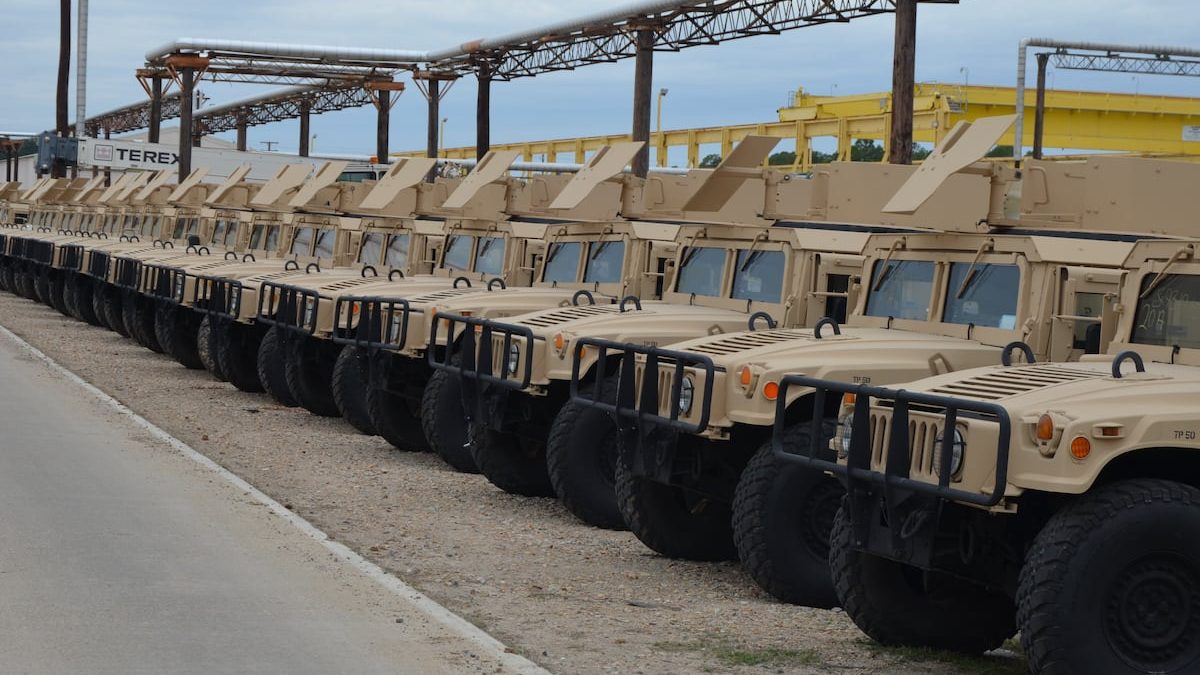

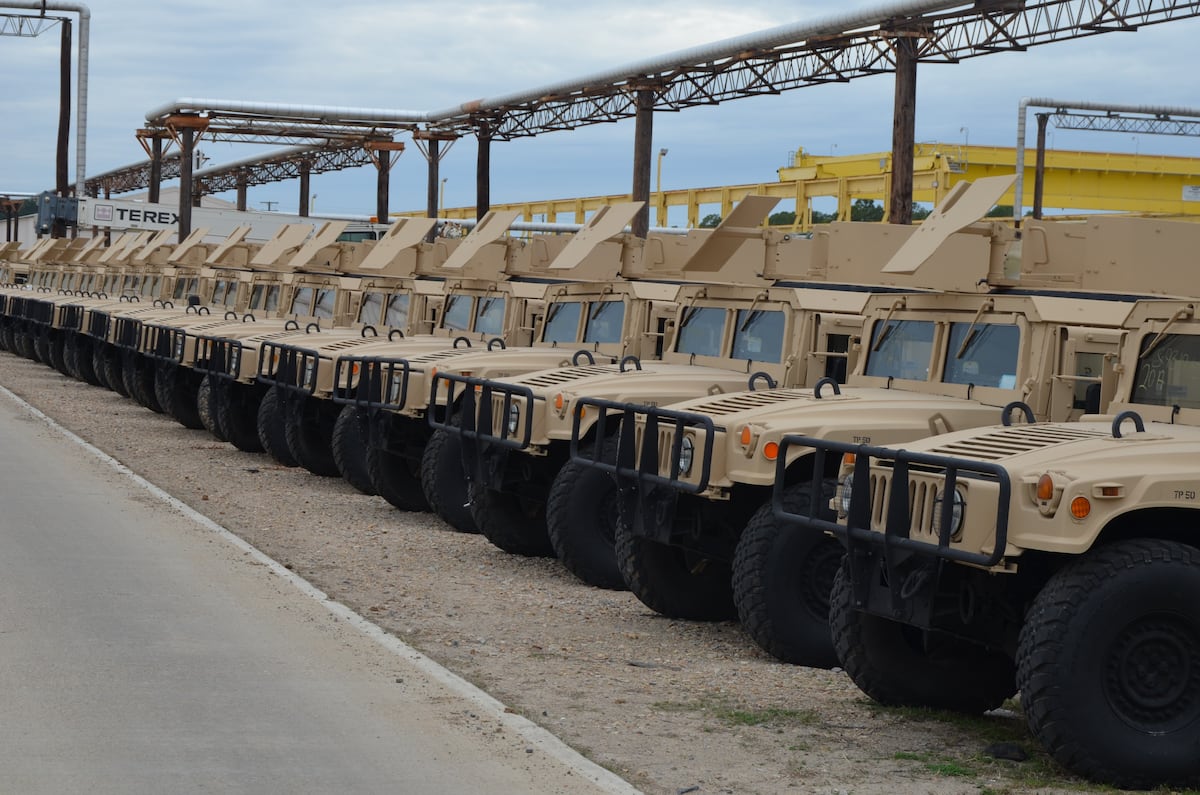
The Army has kicked off an “M9s to Strykers” comprehensive evaluation of its weapons platforms as it pushes for greater organic repair capability and seeks to shore up logistics support in preparation for future conflicts.
Lt. Gen. Gavin Lawrence, the deputy commanding general of Army Materiel Command and senior commander of Redstone Arsenal, Alabama, told Army Times in an interview that these “sustainment night courts” began Sept. 25 and will continue over the next two months as Army leaders seek to secure a greater right to repair, prizing intellectual property protections away from manufacturers so soldiers can reset their own gear near the point of need.
The holistic review of weapons systems will determine if “we [are] postured appropriately, in terms of organic capability, and who has responsibility for our weapons systems and platforms,” Lawrence said.
“And the other part is the need, because of the threat we face,” he added. “We talked about having multiple nodes distributing where we’re accumulating our materiel, so we’re not providing large targets for our adversaries, who have the means to disrupt our operations through long-range precision fire.”
AMC is undertaking the sustainment review with the Assistant Secretary of the Army for Acquisition, Logistics and Technology, Lawrence said.
“We’re looking at the logistic[s] support plans for these weapon systems; we’re looking at the source of repair for these through these weapon systems,” he said. “Are there opportunities for certain systems that have been under contracted logistic support to be transferred over to organic repair capabilities? Do we need to bring the source of repair decisions to the left? So these are all the things that are being discussed during the course of these reviews.”
Lawrence couldn’t immediately say whether results of the “night courts” would be made public, and wouldn’t comment on whether any systems might be earmarked for divestiture or retirement as a result of the review.
“We have not established any firm, fixed metric … in terms of target goals,” he said. “But we intend to do a comprehensive review, and the good news is, you have the AMC lifecycle management commands with the acquisition community there to facilitate a thorough review of each of the weapon platforms.”
“Right to repair” became an Army rallying cry under recently departed service secretary Dan Driscoll, who gave a speech at last year’s Association of the United States Army annual meeting in which he held up small UH-60 Black Hawk components that he said would cost tens of thousands for full assembly manufacturer replacements, but could be 3D-printed for a small fraction of that.
“This is why your tank, howitzer or vehicle sits in the motor pool and you can’t use it to train for combat. And if the right to repair is bad in garrison, it will be so much worse in contested Indo-Pacific logistics,” he said.
He called for a future in which “soldiers will be able to download the schematic, manufacture it and install it all in the field.”
The right-to-repair push has spawned legislation that would protect organic repair rights in future contracts. And the Army itself has committed that any future acquisitions would have that right written in.
As the Army’s Aviation and Missile Command prepares to receive new platforms, including the MV-75 Cheyenne tiltrotor aircraft in 2031, Lawrence said factoring in organic repair is a key part of the work.
“I’m excited about what our acquisition community is doing for those new systems to write into the contracts the access to [technical data package] tech and IP that will better position us long-term to sustain those systems, and so that we can utilize technology like advanced manufacturing, etc. to assist in the sustainment of those systems,” he said.
The Army is also evaluating facilities, including its Corpus Christi Army Depot in Texas, to ensure it’s capable of meeting the long-term sustainment needs of the new systems, he said.
Read the full article here