When it comes to upgrading your rifle, choosing the right scope can make or break your shooting experience. Whether you’re a seasoned marksman or just starting, the scope you choose determines more than just how far you can see—it shapes your accuracy, confidence, and overall satisfaction.
But how do you narrow down the options in a market flooded with features, brands, and price points? Let’s break it down step by step.
Why Does Your Rifle Scope Matter?
A quality scope enhances your accuracy, especially at long ranges. It compensates for environmental factors like wind and light, making even tricky shots achievable. The right scope doesn’t just make a difference; it redefines what’s possible.
But here’s the kicker—not all scopes are created equal. A scope that works beautifully for a hunter stalking deer in dense woods might be all wrong for a competitive shooter on an open range. That’s why it’s essential to match the scope to your needs, your firearm, and your shooting style.
Key Considerations When Choosing a Scope
Before you dive into specs, ask yourself a few simple questions:
What will you use the scope for? Hunting, competitive shooting, or recreational plinking?
What’s your budget? High-end optics are incredible but aren’t always necessary.
What’s your experience level? Advanced features are great but can overwhelm beginners.
Once you’ve answered these, let’s dig into the nitty-gritty.
1. Magnification: How Much Is Enough?
Magnification determines how close your target appears. Scopes typically fall into two categories:
Fixed Magnification: These offer simplicity and reliability—perfect for beginners or those who prioritize durability.
Variable Magnification: Adjustable zoom allows you to adapt to various distances. A 3-9x scope, for instance, is versatile enough for hunting and target shooting.
Pro Tip: Don’t overdo it on magnification. A 20x scope might seem impressive, but higher magnification often narrows your field of view and complicates quick target acquisition.
2. Objective Lens Size: Clarity vs. Weight
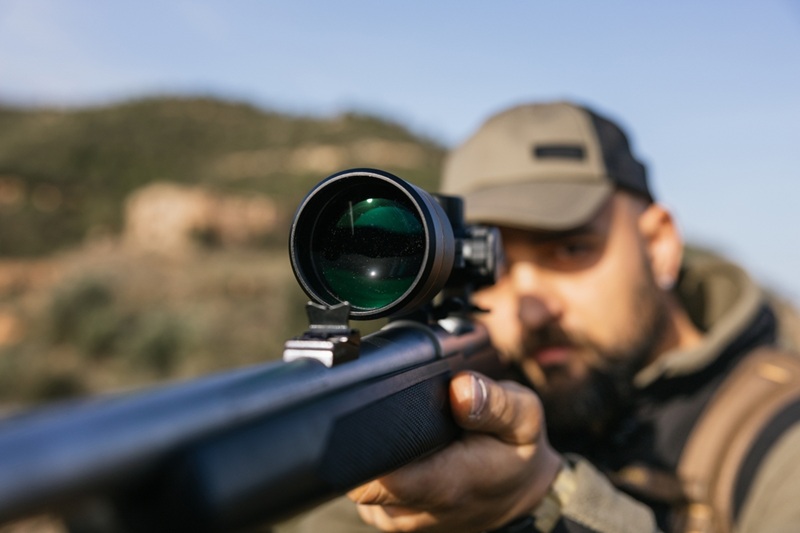
The size of the objective lens (the one at the front) affects light transmission. A larger lens lets in more light, creating brighter images—especially crucial in low-light conditions.
- 40-50mm lenses are a sweet spot for most shooters.
- Larger lenses (over 50mm) can provide better clarity but add weight and bulk.
Ask yourself: Will you be trekking through rough terrain where every ounce counts? If so, bigger might not always be better.
3. Reticle Types
The reticle, or crosshair, affects how you aim, compensate for windage and elevation, and even estimate distance.
Duplex Reticles (simple crosshairs) are user-friendly and versatile.
Mil-Dot Reticles feature dots or marks to assist with rangefinding and windage adjustment—a favorite among tactical shooters.
BDC (Bullet Drop Compensation) Reticles help you adjust for bullet drop over long distances.
Not sure which one fits your needs? Consider how often you’ll shoot at varying distances. For casual hunting, simpler is better. For long-range precision, advanced reticles shine.
4. Durability: Can It Handle the Elements?
A scope’s reliability isn’t just about optics—it’s about construction. Look for scopes that are:
Fogproof and Waterproof: Essential for outdoor adventures.
Shockproof: Protects against recoil and rough handling.
Materials matter too. Aircraft-grade aluminum is a popular choice for its strength-to-weight ratio. After all, your scope isn’t much good if it fogs up on a rainy day or gets knocked off zero after a few rounds.
5. Adjustments: Fine-Tuning for Accuracy
Scopes come with turrets to adjust windage (horizontal) and elevation (vertical). While basic models might have capped turrets, high-end scopes often feature exposed, tactical turrets for quick adjustments.
Pay attention to the adjustment increments—measured in MOA (Minute of Angle) or MRAD (Milliradian). Precision shooters often prefer MRAD for its mathematical ease, but MOA is more common among hunters and hobbyists.
Don’t Forget About Eye Relief
Eye relief is the distance between your eye and the scope’s eyepiece while still seeing the full image. Too short, and you risk a painful encounter with recoil (affectionately known as “scope bite”). Most scopes offer 3-4 inches of eye relief, but if you’re using a high-recoil firearm, aim for the higher end of that range.
Brand Matters—But It’s Not Everything
Let’s be honest—brands like Vortex, Leupold, and NightForce have stellar reputations for a reason. Their scopes are precision-engineered and built to last. But lesser-known brands can also offer incredible value. What matters most is finding a scope that meets your needs without overpaying for features you won’t use.
When in doubt, visit a trusted firearms dealer like Sporting Systems to test out different scopes. There’s no substitute for handling a scope in person to see how it feels and performs.
Wrapping It Up: Finding Your Perfect Fit
Choosing a rifle scope isn’t just about specs; it’s about understanding your needs and how each feature enhances your experience. Sure, a 6-24×50 tactical scope sounds impressive, but is it what you need for deer hunting at 150 yards? Probably not.
So, start with the basics: magnification, lens size, and reticle type. Think about your environment, your firearm, and your style of shooting. And don’t be afraid to ask for advice—every experienced shooter has been where you are now.
When you find the right scope, you’ll know it. Suddenly, those distant targets don’t seem so distant, and each shot feels like second nature. Isn’t that what it’s all about?
With the right rifle scope, your shooting journey transforms. Whether you’re bagging your first buck or nailing bullseyes at the range, a scope tailored to your needs makes every shot count. So, take your time, explore your options, and get ready to see the world through a whole new lens.
Rifle Scope FAQs
What magnification is best for hunting?
A 3-9x scope is versatile for most hunting scenarios.
How often should I re-zero my scope?
Re-zero after transporting your firearm or changing ammunition.
Can I use a rifle scope on different firearms?
Yes, but ensure the scope can handle the specific firearm’s recoil and mounting system.
What’s the difference between MOA and MRAD?
MOA is measured in inches, while MRAD uses metric measurements, offering different levels of precision.
Read the full article here