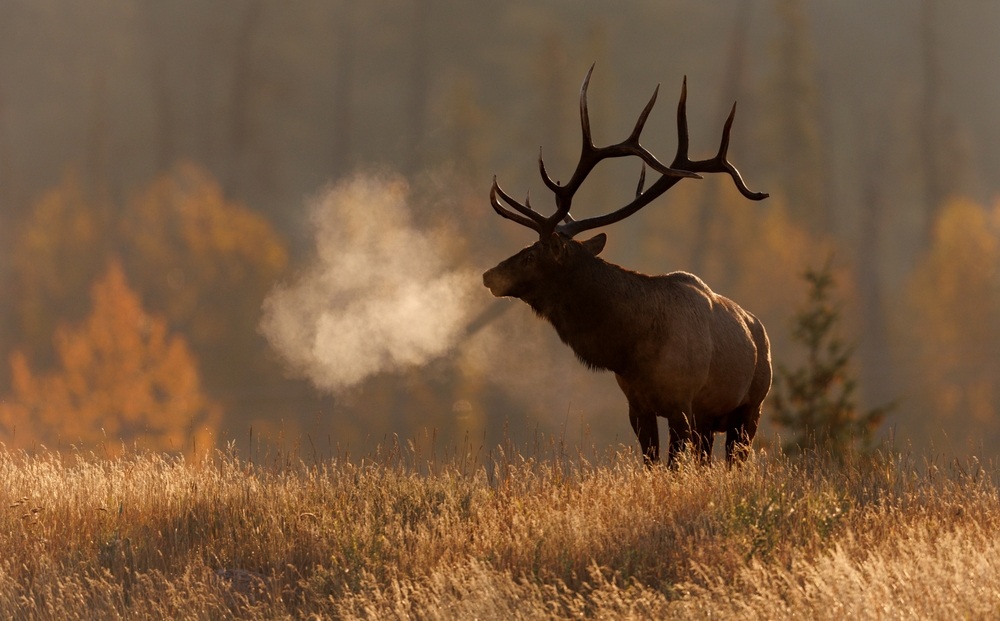

Elk hunting has a way of testing both hunter and gear like few other pursuits. Bulls roam steep ridges and dense timber, their bugles echoing through valleys that seem to stretch forever. At full size, a mature bull can weigh more than 700 pounds, carry a rack that sweeps wide across the skyline, and disappear into dark timber in seconds. To meet such an animal on its own ground, a hunter must be prepared with a rifle that can handle the challenge.
Choosing the right rifle for elk is not about sheer firepower alone. It’s about matching caliber, platform, and bullet design to the terrain and the distances at which shots are likely to present themselves. A well-selected rifle makes the difference between an ethical, one-shot harvest and a long, difficult tracking job.
At Sporting Systems, we’ve worked with hunters from across the Northwest who pursue elk every season. The rifles they carry and the choices they make about caliber, optics, and bullet construction reveal what works consistently in the field. This guide walks through the proven options, the debates around magnums and non-magnums, and the practical considerations that will help you make the best choice.
What Caliber Is Best for Elk Hunting?
Ask 10 elk hunters which caliber they trust most, and you might get 10 different answers, each with field stories to back it up. The truth is, elk can be cleanly taken with a wide range of cartridges. The key is penetration through thick shoulder muscle and ribs, along with enough retained energy at distance to reach the vitals.
Popular Elk Cartridges
.270 Winchester: A legendary round for Western hunting, the .270 offers a flat trajectory and mild recoil. With 150-grain or heavier controlled-expansion bullets, it is more than capable of taking elk out to 400 yards. Shot placement is critical, but many hunters swear by it.
.308 Winchester: Compact, efficient, and widely available, the .308 provides manageable recoil while still pushing bullets that can handle elk. It performs especially well inside 300 yards, making it suitable for timber hunts and moderate ranges.
.30-06 Springfield: The workhorse of North American big game hunting. Loaded with 180-grain or heavier bullets, it has accounted for countless elk over the decades. Its versatility, availability, and balance of power and recoil make it one of the best all-around elk cartridges.
7mm Remington Magnum: Loved for its ability to shoot flat and carry energy at long range, the 7mm Rem Mag delivers excellent performance with 160–175 grain bullets. It’s a popular option for hunters who expect shots across canyons or wide meadows.
.300 Winchester Magnum: A powerhouse round that extends range and energy significantly. It does produce more recoil, but for hunters confident behind it, the .300 Win Mag offers an edge in difficult terrain where long-range shots are common.
The Bottom Line
Yes, a .270 can kill elk. So can a .308, .30-06, or any of the popular magnums. The choice depends on your comfort level and the environment you’ll be hunting. Accuracy trumps power every time.
Factors to Consider When Choosing an Elk Rifle
Selecting the best rifle means thinking beyond caliber. Elk hunts often demand long hikes, steep climbs, and fast decisions. A rifle must match the hunter as much as the cartridge does.
Hunting terrain: Thick timber calls for quick handling rifles and shorter-range calibers, while open ridges demand flat-shooting rifles that hold energy at distance.
Typical shot distance: Many elk are harvested between 200 and 400 yards. Consider whether your rifle and scope can consistently deliver accuracy in that range.
Recoil tolerance: It’s tempting to reach for a magnum, but excessive recoil can ruin accuracy. The best rifle is one you can shoot repeatedly with confidence.
Rifle weight: A lightweight rifle makes climbs easier but may kick harder. A heavier rifle tames recoil but can be burdensome in steep country. Balance is key.
Ammunition availability: Exotic cartridges may shine on paper, but if you can’t buy ammunition easily, it’s a liability. Stick with popular calibers that can be found almost anywhere.
Best Rifles for Elk Hunting
Once caliber and factors like weight and recoil are settled, the platform itself deserves careful consideration. Several rifles stand out as favorites among elk hunters.
Bolt-Action Rifles
Bolt-actions dominate elk hunting thanks to their precision and durability.
Remington 700 – A legendary rifle with decades of success in the elk woods. Its accuracy and aftermarket support make it easy to customize.
Winchester Model 70 – Known as the “Rifleman’s Rifle,” it offers controlled-round feed and proven performance in rugged terrain.
Tikka T3x – Lightweight, exceptionally accurate, and smooth to operate, making it ideal for mountain hunts.
Lightweight Mountain Rifles
Designed for hunters who cover miles of elevation, these rifles prioritize portability without sacrificing accuracy.
Browning X-Bolt Mountain Pro – Corrosion-resistant with a lightweight stock, built for high-country elk hunting.
Weatherby Mark V Backcountry – Combines cutting-edge materials with Weatherby’s reputation for power and precision.
Lever-Action Rifles
Though less common, lever-actions can be effective in close timber.
Marlin 1895 in .45-70 Govt – A heavy hitter suited for close encounters. It may not offer long-range precision, but at under 150 yards, it hits with authority.
Do You Need a Magnum Rifle for Elk Hunting?
Many hunters wrestle with this question. Magnum cartridges like the 7mm Rem Mag or .300 Win Mag certainly offer advantages: flatter trajectories, more retained energy, and the ability to reach across valleys where elk often roam.
Yet countless elk have fallen to non-magnums like the .308, .30-06, and .270. The deciding factor is accuracy and bullet choice. If you’re confident and accurate with a non-magnum, it’s better than flinching behind a rifle you dread shooting.
Magnums are tools, not requirements. Consider where you hunt, the distances you expect, and your comfort with recoil before making the decision.
Best Bullets for Elk Hunting
Elk require bullets that combine expansion with penetration. A projectile that fragments too quickly may not reach the vitals, while one that fails to expand risks a slow recovery. Controlled-expansion bullets are the standard for elk.
Nosler Partition – Time-tested and highly reliable for deep penetration.
Barnes TTSX – All-copper design delivers near-perfect weight retention.
Hornady ELD-X – A precision long-range bullet that expands reliably across a wide velocity range.
Federal Trophy Bonded Tip – Bonded-core bullet that maintains integrity through heavy bone and muscle.
Bullet weight matters too. For elk, lean toward heavier bullets within your caliber—150–180 grains in .270 or .30-06, 160–175 in 7mm, and 180–200 in .300 Win Mag.
Elk Hunting Rifle Tips
Even the best rifle and bullet won’t save a hunter who neglects preparation. Success comes from practice and planning.
Train from field positions: Elk rarely stand broadside while you’re resting on a bench. Practice kneeling, sitting, and shooting off sticks or backpacks.
Choose the right optics: A 3-9x or 4-12x scope is versatile enough for timber and open country. Clear glass and reliable adjustments are more important than extreme magnification.
Zero your rifle properly: Many hunters zero at 200 yards, which keeps bullet drop manageable out to 300–400 yards with most calibers.
Know elk anatomy: Learn where to place shots for quick, ethical kills. The vitals are large, but accuracy is still crucial.
Plan for the pack-out: Harvesting an elk is only half the job. Have a strategy for quartering, packing, and preserving meat in often remote conditions.
Elk hunting demands respect for the animal and the environment. The ideal rifle is the one that complements your shooting technique, the terrain, and your proficiency in making precise shots when it counts.
From the mild recoil of the .270 to the far-reaching power of the .300 Win Mag, hunters have a wealth of choices. Bolt-actions remain the cornerstone of elk rifles, though lightweight mountain rifles and even lever-actions have their place. Paired with a controlled-expansion bullet and steady practice, any of these options can put elk meat in the freezer.
At Sporting Systems, we help hunters prepare for every aspect of the hunt. Whether you’re after your first bull or refining your setup for another season, we can guide you toward rifles, optics, and ammunition that will perform when the bugle echoes and the shot finally presents itself.
Read the full article here