
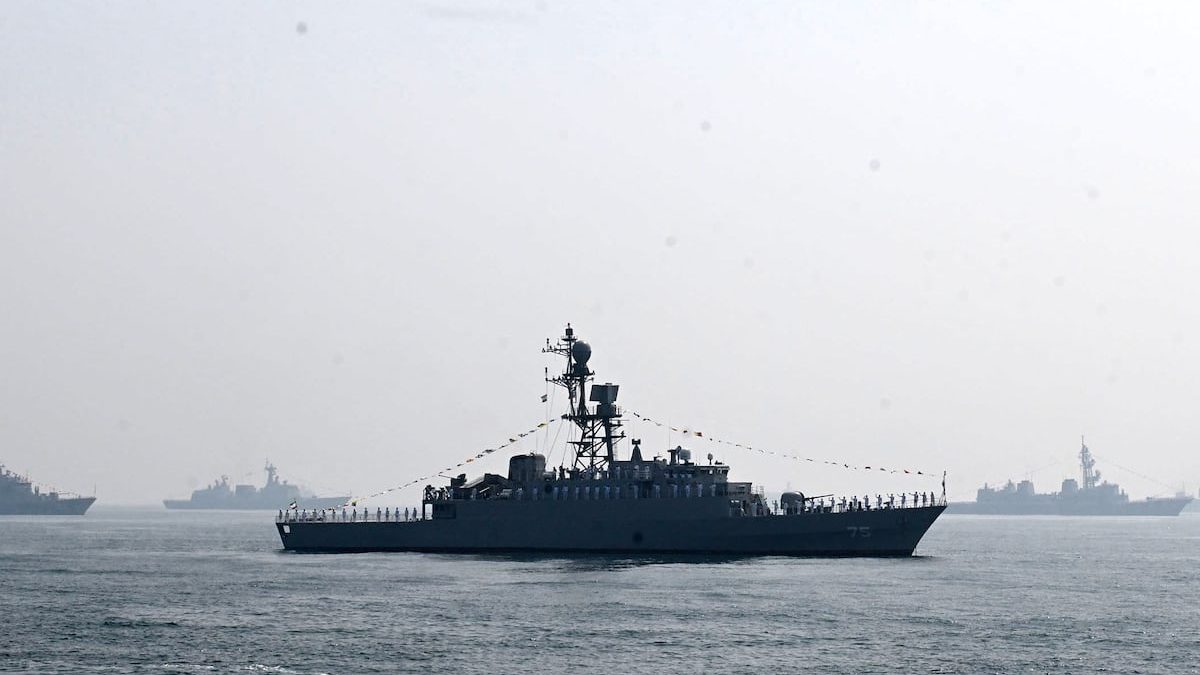

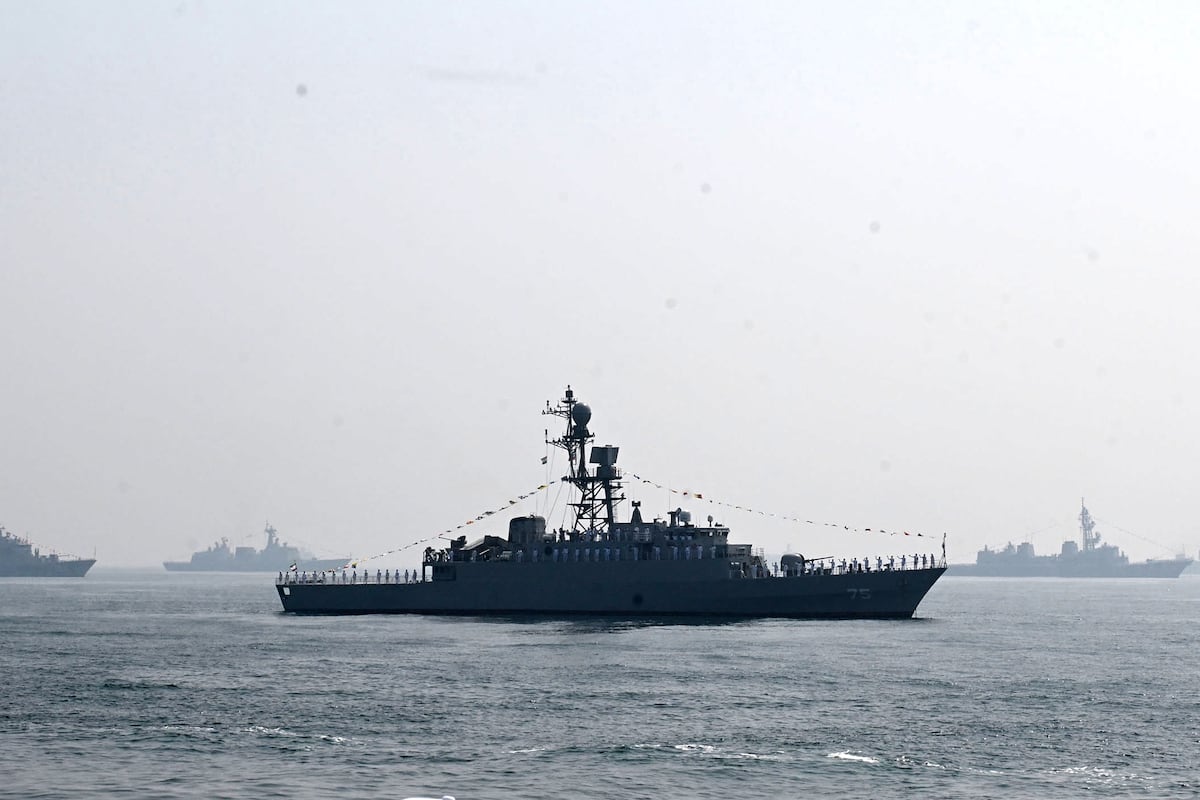
NEW DELHI — The United States and Iran have offered sharply different accounts of the sinking of an Iranian warship in the Indian Ocean last week, with Washington rejecting Tehran’s claim the vessel was unarmed and Iranian officials insisting it was operating in a noncombat role.
The United States Indo-Pacific Command on Sunday rejected Iran’s claim that the warship IRIS Dena was unarmed when it was sunk in a submarine attack in international waters off Sri Lanka on March 4. In a statement on X, INDOPACOM called Iran’s assertion that the vessel was unarmed “false.”
The response followed strong objections from Tehran, which has repeatedly characterized the warship as defenseless, saying it was returning home after taking part in a naval exercise.
An Indian navy official, speaking on condition of anonymity because he was not authorized to brief the media, said the Iranian vessel was not “entirely unarmed” and had taken part in drills alongside other countries’ warships.
Some experts have, however, suggested that visiting ships at such events typically do not carry a full combat load of live munitions unless scheduled for live-fire drills. They say even during the sea phase of exercises, ships generally carry only tightly-controlled ammunition limited to specific drills.
Rahul Bedi, an independent defense analyst based in India, said the vessel may have used some limited non-offensive ammunition during the naval exercises, but protocol requires “the participating platforms to be unarmed.”
“The precondition of participating in such a parade, or such a ceremony, is that it (the vessel) comes unarmed. That is the precondition of the Indian Navy and it’s a precondition of most navies when they hold such similar sort of fleet reviews,” Bedi said.
Iran’s Deputy Foreign Minister Saeed Khatibzadeh said Friday that the warship, sunk by a U.S. torpedo, had not been carrying weapons and accused Washington of targeting a ceremonial vessel.
“That vessel was by invitation of our Indian friends, attending an international exercise. It was ceremonial. It was unloaded. It was unarmed,” he told reporters in New Delhi.
The IRIS Dena was sunk on March 4 in the Indian Ocean near Sri Lanka after being struck by a torpedo fired from a U.S. submarine, according to American and Iranian officials. The Sri Lankan navy rescued 32 sailors and recovered 87 bodies.
U.S. Defense Secretary Pete Hegseth described the IRIS Dena as a “prize ship” and said it “died a quiet death.” Iran’s Foreign Minister Abbas Araghchi described the attack as “an atrocity at sea” and stressed that it had been “a guest of India’s Navy.”
Disputes over whether the vessel was armed have intensified tensions over the incident, which occurred as it was returning from multinational naval exercises in India, and raised questions about whether it was operating in a noncombat role when it was attacked.
India’s defense ministry said in a statement after the exercises that “live firings as part of surface gun shoots, as well as anti-air firings, were also undertaken” by participating vessels.
The warship’s sinking highlighted how the U.S.-Israeli war with Iran is spreading beyond the Middle East.
Two other Iranian vessels — the IRIS Bushehr and IRIS Lavan — are docked in Sri Lanka and India after seeking assistance from the two countries.
Associated Press writer Aijaz Hussain in Srinagar, India, contributed to this report.
Read the full article here