
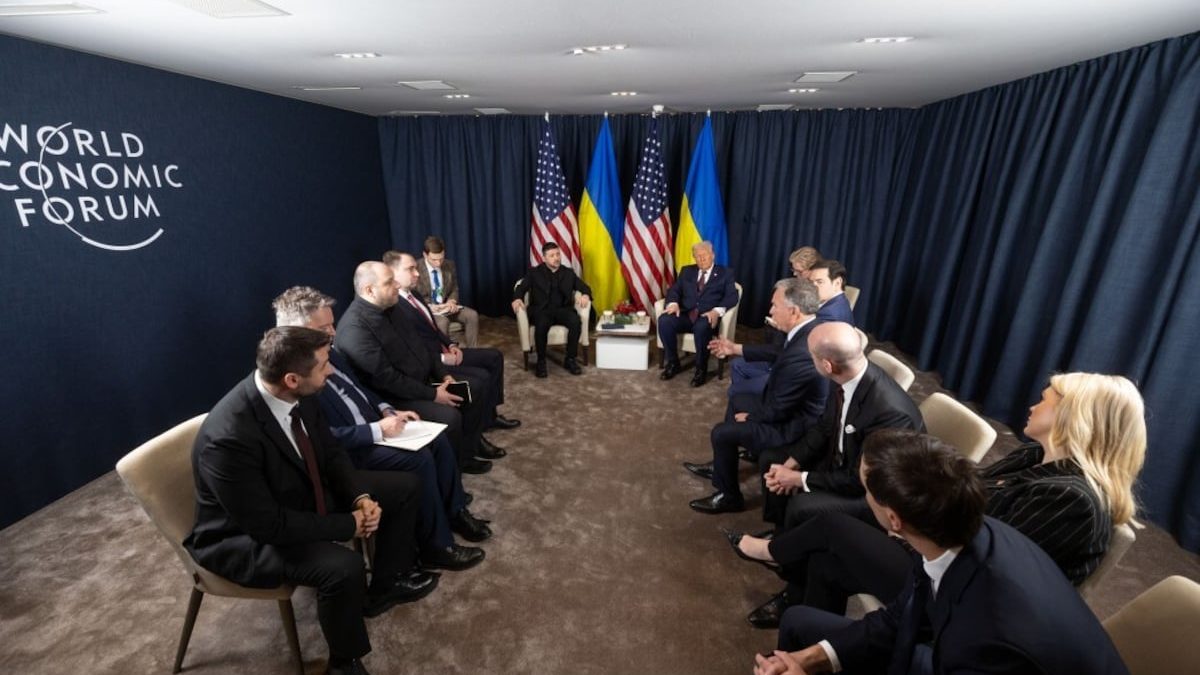

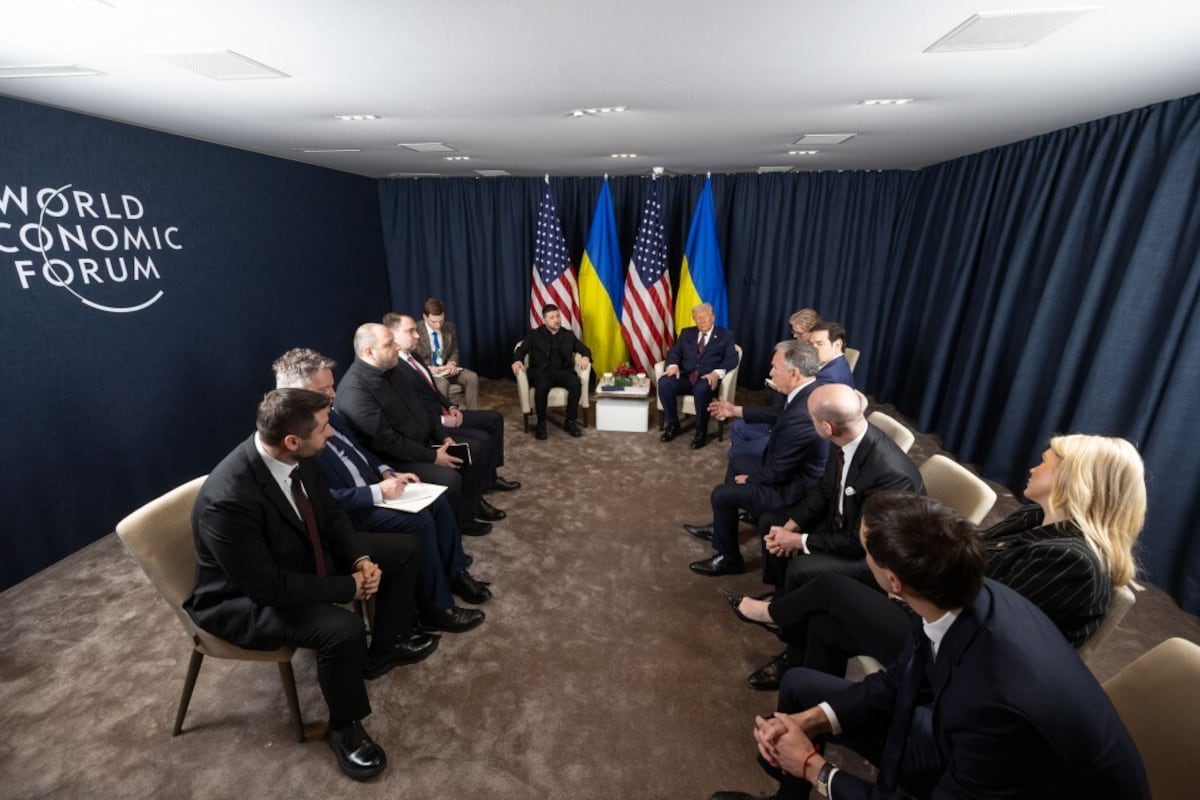
KYIV, Ukraine — As U.S. President Donald Trump started the new year by flaunting American military power in Venezuela, the episode has left Ukrainian officials wondering whether Washington would exhibit a similar brand of decisiveness in 2026 to end Russian attacks on Ukraine.
The Jan.3 U.S. raid to capture Venezuelan strongman president Nicolás Maduro was over before dawn, drawing praise from military leaders in Washington for its flawless execution.
Ukrainian President Volodymyr Zelenskyy watched from Kyiv and didn’t bother to hide the message Ukrainians heard.
“If you can do that with dictators,” Zelenskyy told reporters later, “then the United States knows what to do next.”
He again dared the West to act against the Kremlin in his speech on Thursday at the World Economic Forum in Davos, where he said: “Maduro is on trial in New York. Sorry, but Putin is not.”
Trump’s decision to snatch Maduro and intercept Venezuelan tankers is the decisive power Ukrainians once hoped he’d use against Russia — and the sphere-of-influence move that makes them wonder how fast any U.S.-drafted peace deal could shift under their feet.
Retired U.S. Army Lt. Gen. Ben Hodges has been arguing for months that Washington has been underselling its sway with Russia.
Hodges commanded U.S. Army Europe from 2014 to 2017 — through Russia’s first invasion of Ukraine and the start of the war in Donbas — and has since become one of NATO’s sharpest critics of Western hesitation.
“President Trump has enormous leverage over Russia,” Hodges told Military Times. “He just has never used it.”
“American dominance in the Western Hemisphere will never be questioned again,” Trump declared in a White House statement on Jan. 3. “We’re going to run the country,” he said, referring to Venezuela, according to NPR.
Moscow seemed to know what was coming. Kremlin officials began evacuating the families of Russian diplomats in Venezuela days before the U.S. launched its attack, the AP reported on Dec. 23. The Russian Ministry of Foreign Affairs later denied in an X post that it was sending its representatives home, but did not address whether diplomats’ families had been asked to leave.
The Kremlin had advance warning — and didn’t seem to warn Maduro or take any serious defensive action. Putin’s foreign ministry protested after the fact; Putin himself stayed silent.
At the same time, the domestic pushback to Trump’s attack on the oil-rich South American nation has been fierce, even among some in his own party.
“Bombing another nation’s capital and ousting their leader constitutes an act of war, plain and simple,” said Sen. Rand Paul, per CNBC. “The Constitution does not grant such authority to the presidency.”
But Trump has kept going.
Vice President JD Vance announced on Fox News that the U.S. now “controls the energy resources” of Venezuela and tells the regime what oil it can sell so long as it serves “America’s national interest.”
White House Press Secretary Karoline Leavitt declared that Venezuelan authorities’ decisions would “continue to be dictated by the United States of America,” Euronews reported.
Venezuela proved Trump could move fast, confront Moscow, and bulldoze Congress when he wants to. For officials across Europe and Ukraine, it confirmed what Hodges had warned: Trump has the leverage. He just hasn’t decided Kyiv is worth using it.
What this means for Kyiv
Analysts at Chatham House warned that allies “will be far from reassured,” noting Trump’s “willingness – indeed, as displayed during his press conference, exhilaration – to use US military power is clear.” Experts at the Brookings Institution put it more bluntly: “Ukrainians are likely watching in grim recognition” of how little leverage they have when Washington decides to move.
Meanwhile, earlier this month French President Emmanuel Macron gave voice to the fear that global norms are beginning to crumble. In his annual address to French ambassadors, he warned that the United States was “breaking free from international rules” and “gradually turning away” from its allies.
“We are living in a world of great powers,” Macron said, “with a real temptation to divide up the world,” according to France 24.
Days earlier, Macron had convened 35 participants in Paris to address the messy peace negotiations — including ceasefire monitoring, armed forces support, and long-term defense cooperation.
Instead of Secretary of State Marc Rubio, Trump sent Steve Witkoff, his special envoy and longtime real estate friend with no diplomatic experience, and son-in-law Jared Kushner.
For Kyiv, it was a signal: Venezuela has the secretary of state’s attention. Ukraine gets the B-team.
Ukrainians are watching the new dynamics closely. In December polling by the Kyiv International Institute of Sociology, only 21% of Ukrainians said they trusted the United States — down from 41% in December 2024. Distrust rose from 24% to 48%. The phrase that kept surfacing in interviews: “bargaining chip.”
A senior European diplomat with knowledge of the peace negotiations, who spoke on condition of anonymity, said there is a bigger picture at play for American leaders.
“Trump doesn’t see Ukraine in isolation,” the diplomat told Military Times. “He sees it as one lever among many — from sanctions to oil to troop deployments — and that is terrifying if you live inside the theater he is trading over.”
Where this is heading
“It’s a shame that the erstwhile leader of the free world has decided to withdraw to the Western Hemisphere when our European allies are facing the greatest security threat since World War II,” Ian Kelly, who served as U.S. ambassador to Georgia and the Organization for Security and Cooperation in Europe, told Military Times.
“But that’s the world Europe has now. It’s not the world they want, but it’s the world they’re dealing with.”
Zelenskyy seems to agree. Days after Caracas, he offered a dare to the newly war-ready American president: If Trump could topple a dictator in 90 minutes, when would that firepower point east?
“Let them carry out some operation against Kadyrov, this murderer,” Zelenskyy said, Ukrainska Pravda reported. Ramzan Kadyrov, the Chechen strongman who has ruled the republic since 2007 with Putin’s blessing, commands forces accused of war crimes in Ukraine and runs what human rights groups call a personal fiefdom built on torture and disappearances.
“Maybe Putin will see that and stop to think.”
Read the full article here