
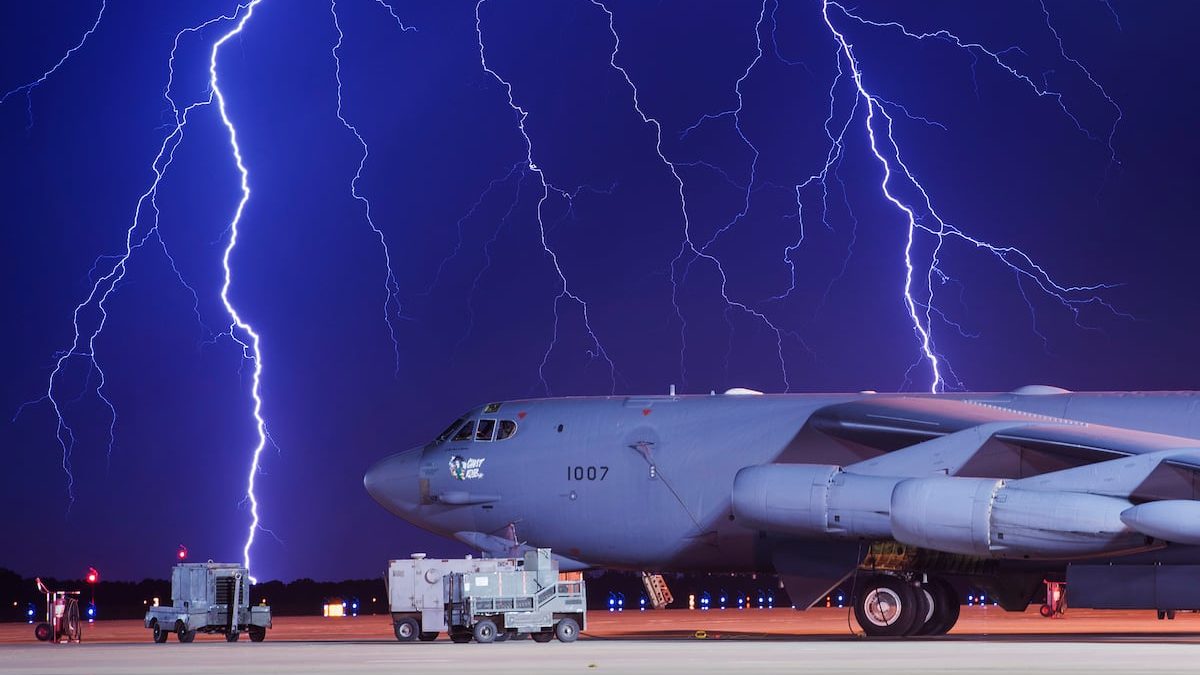

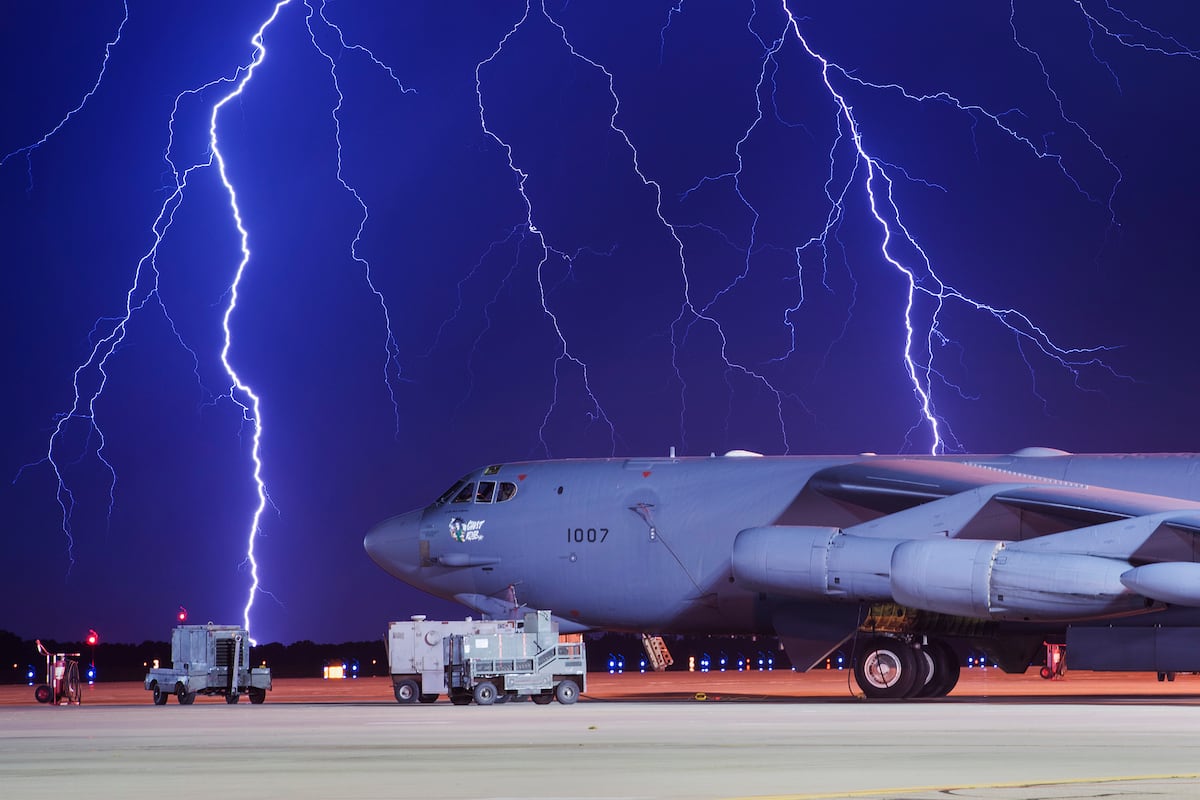
First flown in 1952, the Boeing B-52 has seen service in Vietnam, Desert Storm, the Global War on Terror — and now Iran.
U.S. forces have hit 2,000 targets in Iran since the opening salvos of Operation Epic Fury on Feb. 28, adding the B-1 Lancer and B-52 Stratofortress bombers to the air attacks, U.S. Central Command reported Tuesday morning.
The long-range, heavy bomber has the potential to become the first military aircraft to remain in service for a century.
As of Sunday night, U.S. Air Force B-1B Lancer bombers conducted long-range strikes deep inside Iran. Gen. Dan Caine, chairman of the Joint Chiefs of Staff, told reporters Monday at the Pentagon that the strikes targeting ballistic missile facilities and command-and-control infrastructure resulted in “the establishment of local air superiority.”
“This air superiority will not only enhance the protection of our forces but also allow them to continue the work over Iran,” Caine said.
RELATED
On Tuesday, U.S. Central Command confirmed on X that an armada of B-52s, nicknamed “Stratosaurus” for its advanced years, was used in a strike against “ballistic missile and commander control posts.”
The B-52H is capable of flying at high subsonic speeds at altitudes of up to 50,000 feet. It can carry nuclear or precision-guided conventional ordnance, and it has a payload of approximately 70,000 pounds of mixed ordnance-bombs, mines and missiles, according to the Air Force.
First flown on April 15, 1952, the prototype YB-52 Stratofortress was America’s first all jet-engine intercontinental strategic bomber, according to historian Carl O. Schuster.
By building a remarkably light yet simple and durable airframe with an enormous volume of internal space, Boeing’s design has allowed for continual upgrades well into the 21st century.
The B-52D was the most numerous version in service when Stratofortress planes were ordered to support the Vietnam War in 1965, becoming the backbone of America’s strategic bomber force.
The B-52’s most prominent missions over Vietnam were part of Operation Linebacker II, when the bombers were unleashed for 11 days in December 1972 to crush Hanoi and the seaport of Haiphong, according to historian Stephen Wilkinson. The devastation they wrought convinced the North Vietnamese to return to the negotiating table.
The plane has been in continuous use since then.
During a Pentagon press briefing Wednesday on Operation Epic Fury, Caine, alongside Defense Secretary Pete Hegseth, noted that, to date, the U.S. has hit over 2,000 total targets across Iran and destroyed more than 20 of the Islamic Republic’s naval vessels.
Claire Barrett is an editor and military history correspondent for Military Times. She is also a World War II researcher with an unparalleled affinity for Sir Winston Churchill and Michigan football.
Read the full article here