
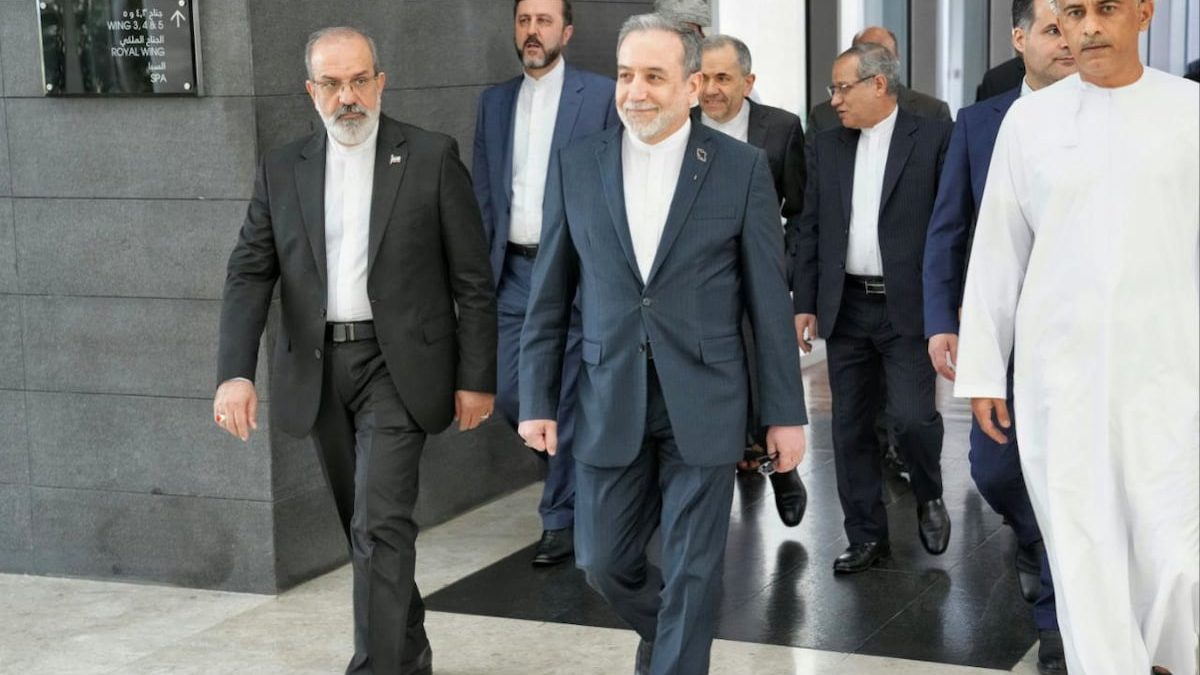

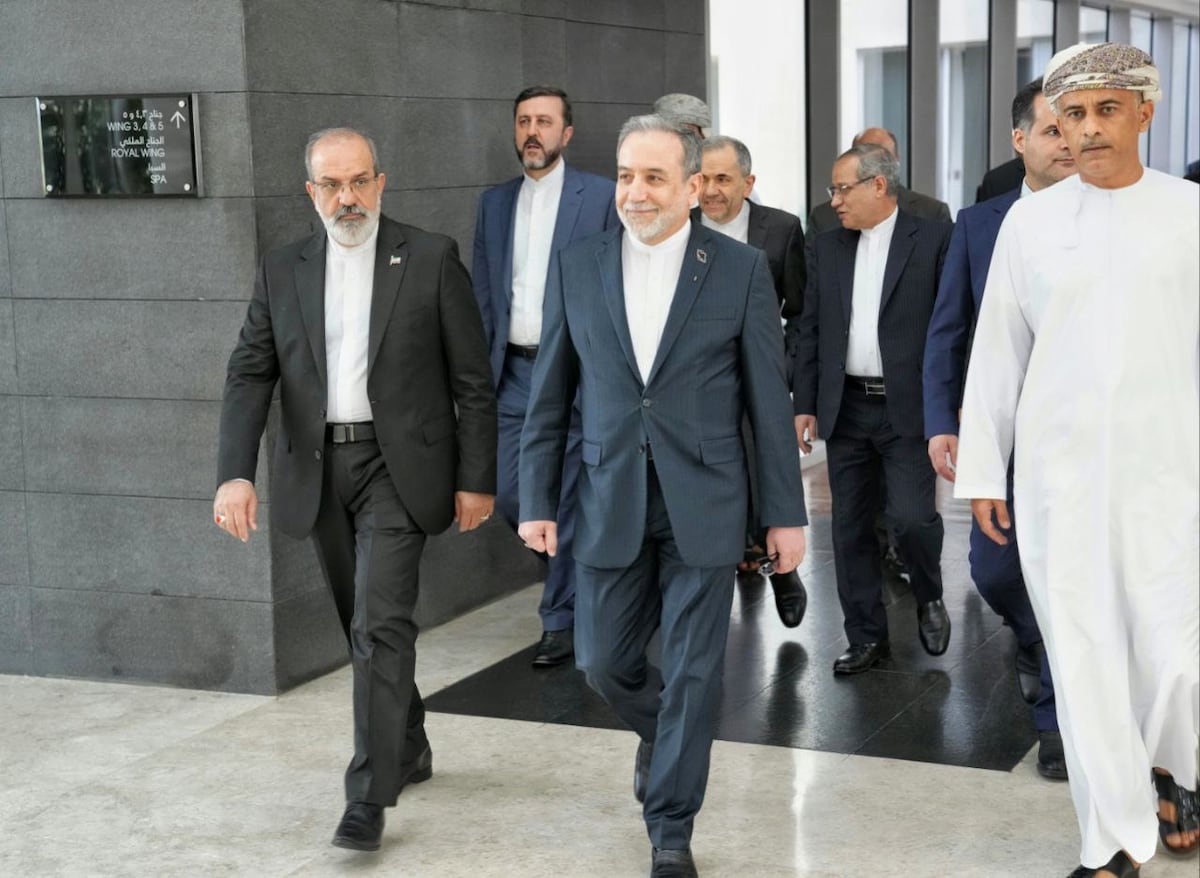
U.S. and Iranian officials convened in Oman on Friday, opening the door to a modest easing of tensions even as American warships mass in the Arabian Sea.
The talks, arranged by regional power brokers, brought together President Donald Trump’s special envoy, Steve Witkoff, his son-in-law, Jared Kushner, and Iran’s foreign minister, Abbas Araghchi, in an effort to stave off a wider war in the Middle East. Navy Adm. Brad Cooper, the head of U.S. Central Command, was also part of the U.S. delegation in Muscat, an American official told Military Times.
Oman’s foreign minister, Badr al-Busaidi, who mediated between the two sides, wrote in a post on X after the meeting that the next step was to “reconvene in due course.”
Ahead of the negotiations, U.S. Secretary of State Marco Rubio cast the meeting as a diplomatic opening to advance American strategic interests, rather than a concession.
He said the negotiations would have to encompass other topics in addition to Iran’s nuclear program — including its ballistic missile arsenal, support for proxy groups and the Islamic Republic’s “treatment of their own people.” Tehran rejected the broader agenda, insisting discussions remain confined to the nuclear issue.
RELATED
The U.S. military has positioned a fleet of warships and dozens of F-15E attack plans in the CENTCOM area of responsibility, and satellite imagery suggests additional firepower is on its way. About 40,000 American troops remain stationed across the region, according to U.S. officials.
Trump described the naval buildup as a “massive armada” and warned that failure to reach a deal could provoke an attack “far worse” than the last time. In June, as Iran fought a 12-day war with Israel, the president used the threat of devastating U.S. force to ramp up pressure for an agreement. When Tehran missed Trump’s deadline to finalize a nuclear deal, American B-2 stealth bombers were deployed, dropping bunker-buster bombs on Iran’s nuclear facilities.
Araghchi, in an interview with Iranian state TV on Friday, acknowledged the first face-to-face discussions since last summer’s war were hampered by his nation’s “previous distrust” of the Americans, which he said was a “serious challenge.” Any progress, he suggested, would hinge both on Washington’s conduct and decisions taken in Tehran.
“If this process continues, I think we will reach a good framework for an understanding,” Araghchi added.
The White House contends that if a path for diplomacy exists, Trump intends to fully explore it. But force remains an option. The threat was on display just days before the talks. U.S. forces shot down an Iranian drone that they said was “aggressively” approaching the USS Abraham Lincoln aircraft carrier in the Arabian Sea.
“I would remind the Iranian regime that the president has many options at his disposal, aside from diplomacy, as the commander in chief of the most powerful military in the history of the world,” White House press secretary Karoline Leavitt said Thursday.
Iranian officials have issued stark warnings that they would retaliate against U.S. and Israeli targets should Trump authorize a strike. The regime’s allies, who abstained in the 12-day war, are signaling their readiness to enter the fray. One such paramilitary group, Kataib Hezbollah, said a U.S. attack would result in an all-out war in the region, while the Houthi rebels have threatened to resume their attacks on vessels in the Red Sea.
Sina Azodi, the director of Middle East Studies at George Washington University, told Military Times that the Iranian military strategy is shaped by martyrdom forces who vow to fight and die. Azodi pointed to the Iran-Iraq war nearly five decades ago — a protracted conflict marked by mass casualties — as one of the bloodiest of the late 20th century.
“In eight years, Iranians lost 250,000 troops,” he explained. “For them, it’s what the soldier is made for — to go and die. Whereas in American culture, a loss of life matters so much. And Iranians are aware of this. So if they [kill Americans], that’s a win for them.”
“Nobody should be under the illusion that Iran can win a war,” Azodi continued. “But [the regime] would want to make the conflict as costly and as problematic as possible for the Americans and everybody in the region. If they think they’re fighting for their survival, they’re going to throw everything they have.”
Tanya Noury is a reporter for Military Times and Defense News, with coverage focusing on the White House and Pentagon.
Read the full article here