
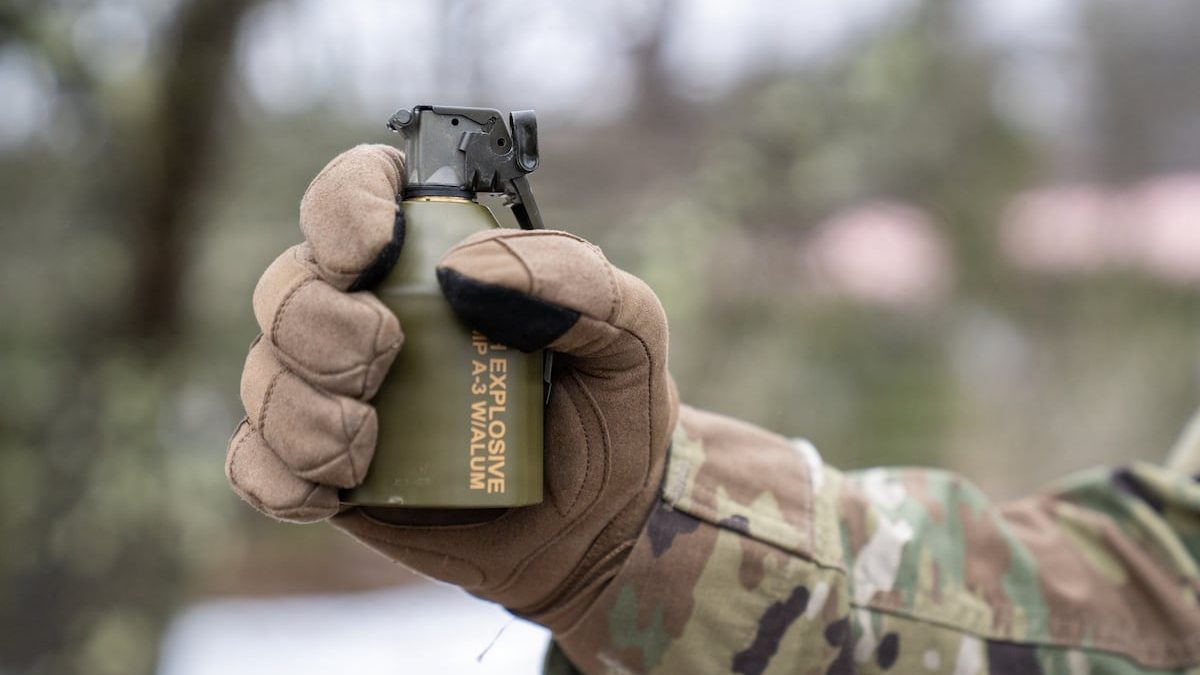

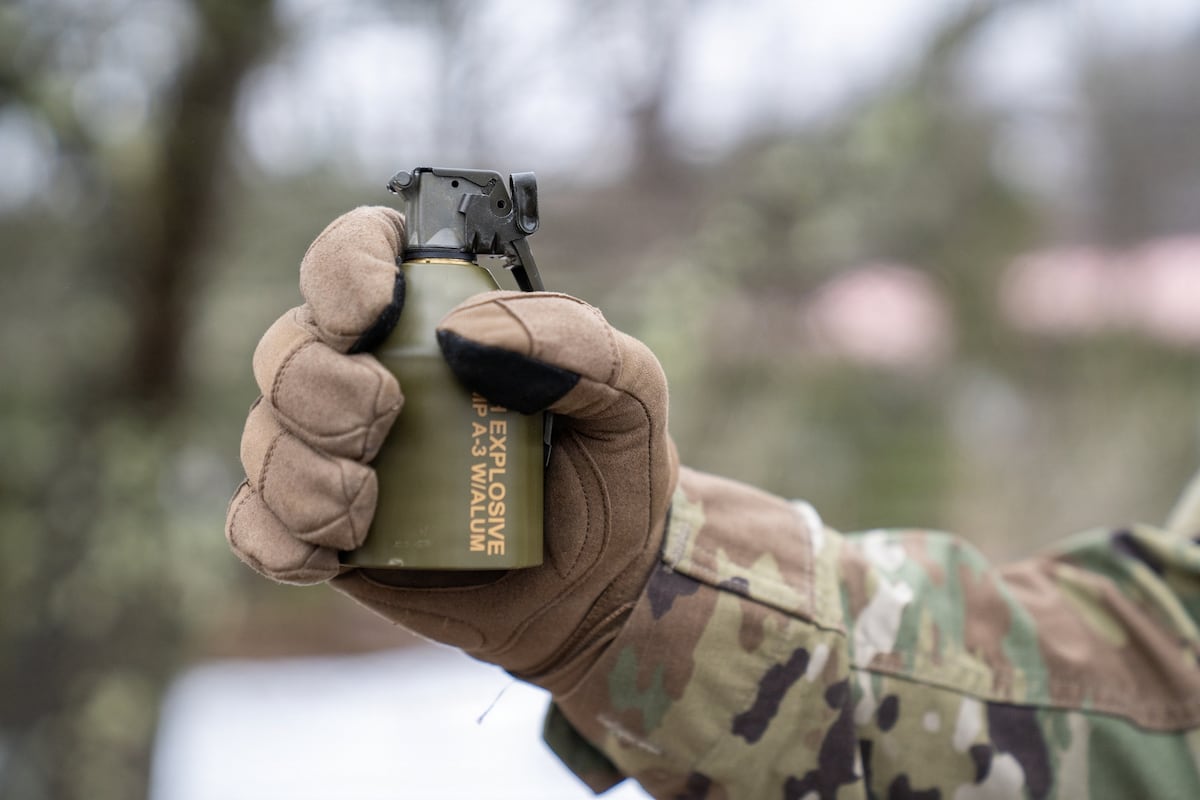
After decades of relying on Vietnam-era designs, the Army has approved the first offensive hand grenade to enter the service since 1968.
The new M111 Offensive Hand Grenade was approved for full material release this year, the Army announced Tuesday in a statement. The new grenade relies primarily on blast overpressure rather than fragmented inner pieces to incapacitate, making it better suited for close-quarters combat inside of buildings, bunkers and tunnels.
Full material release allows the Army to field the weapon across the force after testing has confirmed that it meets safety and performance requirements. The approval lets the Army move the grenade from development into production.
The Army’s standard M67 fragmentation grenade explodes shrapnel in all directions, making it risky for soldiers to use in tight spaces. Blast overpressure refers to the intense pressure wave created by an explosion.
“One of the key lessons learned from the door-to-door urban fighting in Iraq was the M67 grenade wasn’t always the right tool for the job. The risk of fratricide on the other side of the wall was too high,” said Col. Vince Morris, the Army’s project manager for Close Combat Systems, in the statement. But a weapon utilizing blast overpressure instead of fragmentation, he said, “can clear a room of enemy combatants quickly leaving nowhere to hide while ensuring the safety of friendly forces.”
The M111 is intended to replace the body and fuze of the Mk3A2 grenade series, which has an asbestos body that has restricted its use. Unlike the Mk3A2, the new weapon has a plastic casing that is consumed during detonation.
It also uses the same fuze system as the M67 grenade, allowing the service to streamline manufacturing.
The new grenade was developed at Picatinny Arsenal in New Jersey by the Army’s Armaments Center as part of the Army’s efforts to modernize aging munitions.
Eve Sampson is a reporter and former Army officer. She has covered conflict across the world, writing for The New York Times, The Washington Post and The Associated Press.
Read the full article here